Introduction
The history of Vietnam in the twentieth century is deeply marked by two prolonged conflicts involving foreign powers: the French Indochina War (1945–1954) and the United States Vietnam War (1955–1975). Both wars were shaped by the context of colonialism on the French part and the global struggle against communism in the West, yet they differed in their origins, strategies, outcomes, and legacies. This analysis compares the French and American experiences in Vietnam, examining their aims, strategies, challenges, and long-term impacts.
Historical Background
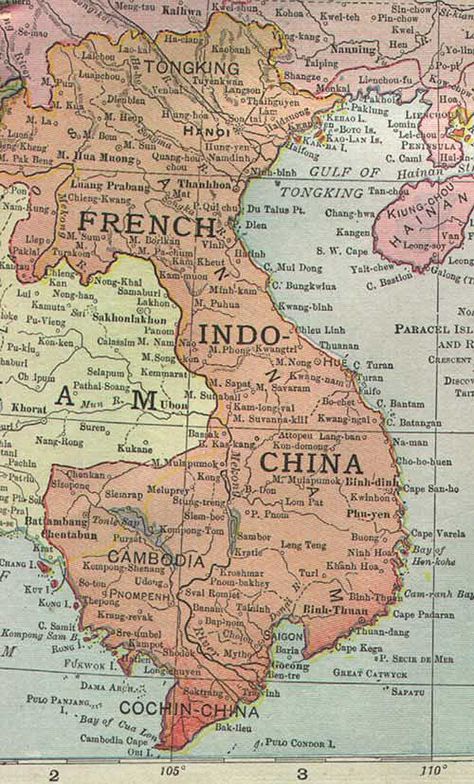
Before the onset of World War II, Vietnam had been a French colony for over six decades, forming part of French Indochina—which included present-day Vietnam, Laos, and Cambodia. During World War II, the Japanese occupation weakened French control and emboldened nationalist and communist movements, especially the Viet Minh. The Viet Minh, a coalition of nationalist and communist forces founded in 1941 under Ho Chi Minh, sought Vietnamese independence from foreign rule. With Japan’s surrender in 1945, the power vacuum in Vietnam intensified local struggles for independence. In the aftermath of WWII, France sought to reassert its colonial authority, leading to the outbreak of the First Indochina War in 1946. Meanwhile, as Cold War rivalry escalated, Western intervention shifted: following the French defeat at the Battle of Dien Bien Phu in 1954, the United States gradually became the principal actor in Vietnam.
Objectives and Motives
French in Indochina (1945–1954)
The primary French aim was to reclaim its colonial possessions and restore its prewar status as an imperial power. French leaders considered Indochina vital for economic exploitation, prestige, and strategic presence in Southeast Asia. The war was thus fundamentally an effort at recolonization, confronting Vietnamese demands for independence. As the conflict intensified, French motives became entangled with anti-communist sentiment, especially as the Viet Minh were both nationalist and communist.
United States in Vietnam (1955–1975)
In contrast, the United States’ involvement was rooted less in colonial ambition than in the geopolitical imperatives of the Cold War. American leaders viewed Vietnam as a critical battleground to contain communism and uphold the credibility of U.S. commitments worldwide. The “domino theory” posited that the fall of Vietnam to communism would precipitate the collapse of Western-aligned regimes throughout Asia. Thus, U.S. intervention was framed as a defense of democracy and freedom, though it ultimately entailed support for fragile, often undemocratic governments in South Vietnam.
Strategies and Military Operations
French Military Approach
The French campaign relied on conventional military tactics, including the use of professional troops, colonial forces, and local auxiliaries. France attempted to establish strongholds in urban centers and key transportation routes while conducting large-scale operations against Viet Minh bases in the countryside. The French established the “hedgehog” defense—fortified outposts in hostile territory—and sought to control the population through administrative and police measures. Nevertheless, French forces struggled to adapt to the guerrilla tactics and popular support enjoyed by the Viet Minh.
Both the French and American strategies were hampered by significant resource limitations and unreliable support, factors that undermined their long-term prospects in Vietnam. The French, for instance, often struggled to field enough troops; by the end of their campaign, they relied heavily on colonial forces and North African units, indicating difficulties in securing sufficient metropolitan soldiers. Supply lines were stretched thin over challenging terrain, and logistical operations suffered from frequent Viet Minh ambushes and sabotage. Furthermore, French political backing was inconsistent, with mounting opposition at home as war expenses escalated and casualties mounted—contributing to wavering resolve within the government and among the public.
Similarly, American forces faced their own constraints. Despite deploying over half a million troops at the height of U.S. involvement, the task of securing both rural and urban regions proved overwhelming. The complexity of the terrain, long supply routes vulnerable to guerrilla attacks, and increasing antiwar sentiment in the United States eroded political will. Congressional debates over funding and strategy exemplified the uncertainty of American commitment, while the South Vietnamese government’s instability further complicated U.S. efforts to build lasting support.
While military victory was sometimes within reach, sustaining peace required ongoing conflict, daily casualties, and unsustainable expenses—realities that ultimately dashed hopes for long-term success for both nations. Local forces leveraged their intimate knowledge of Vietnam’s geography, strong community ties, and highly adaptive guerrilla tactics. These advantages enabled the Viet Minh and later the Viet Cong and North Vietnamese Army to conduct effective operations, blend into the population, and recover from setbacks in ways the foreign armies could not match. In the end, local determination and strategic ingenuity proved decisive in undermining the efforts of outside powers to maintain control.
American Military Approach
The U.S. military strategy evolved over time, initially emphasizing training and equipping South Vietnamese forces. As the conflict escalated, the United States deployed hundreds of thousands of troops and unleashed massive firepower, including extensive air strikes (such as Operation Rolling Thunder), chemical defoliants (Agent Orange), and search-and-destroy missions. American commanders sought to “win hearts and minds” through pacification programs while also engaging in conventional battles, notably the Tet Offensive in 1968. Despite technological superiority, U.S. forces faced persistent guerrilla resistance from both the Viet Cong and North Vietnamese Army.
Challenges and Limitations
French Obstacles
France confronted several challenges: an unfamiliar and inhospitable terrain, language and cultural barriers, limited resources, and a lack of popular support among the Vietnamese population. The Viet Minh’s ability to mobilize peasants and wage protracted guerrilla war undermined French efforts to secure the countryside. Moreover, international opinion increasingly favored Vietnamese independence, and support from the communist bloc—especially China and the Soviet Union—strengthened the Viet Minh militarily and diplomatically.
American Obstacles
The United States faced its own difficulties. The South Vietnamese government was plagued by corruption, incompetence, and lack of legitimacy, which complicated efforts to build an effective fighting force and gain popular backing. Like the French before them, Americans underestimated the resolve and adaptability of their adversaries. The jungle terrain, ambiguous front lines, and the seamless integration of guerrilla fighters into local communities frustrated U.S. military planners. Mounting casualties, media coverage, and domestic opposition further eroded support for the war.
The Role of Ideology and Nationalism
In both conflicts, the Vietnamese resistance was driven by potent forms of nationalism and anti-colonialism. Ho Chi Minh and the Viet Minh effectively united diverse groups under the banner of independence and social revolution, leveraging communist ideology as a force multiplier. For many Vietnamese, the struggle was not just against foreign domination, but for self-determination and social justice. In both wars, the foreign powers failed to grasp the depth of Vietnamese nationalism, mistaking it for mere communist subversion.
International Dimensions
French War in the Context of Decolonization
The French war unfolded amidst the global wave of decolonization, with Asian and African countries demanding sovereignty. International sympathy increasingly favored the Vietnamese cause, as seen in the debates within the United Nations and among emerging non-aligned states. The communists received material and moral support from China (after 1949) and the Soviet Union, giving the Viet Minh a strategic edge.
U.S. War in the Context of the Cold War
American intervention was deeply enmeshed in the bipolar struggle between the Soviet Union and the United States. North Vietnam received extensive aid from the communist bloc, enabling it to sustain military operations and political resistance. The war’s escalation risked drawing in China and the USSR, raising the specter of superpower confrontation. Global opinion grew increasingly critical of U.S. actions, with widespread protest movements and diplomatic isolation.
Endings and Outcomes
French Defeat and the Geneva Accords
The French war ended in disaster at Dien Bien Phu in 1954, where Viet Minh forces besieged and overwhelmed a major French garrison. The subsequent Geneva Accords divided Vietnam at the 17th parallel and set the stage for national elections, which were never held. France withdrew from Indochina, marking the end of its colonial empire in Asia. The outcome reflected the triumph of indigenous nationalism and the limits of colonial power.
American Withdrawal and the Fall of Saigon
After years of stalemate, escalating costs, and growing opposition, the United States initiated a phased withdrawal from Vietnam, culminating in the Paris Peace Accords of 1973. The South Vietnamese government collapsed in 1975, and North Vietnamese forces captured Saigon, unifying the country under communist rule. The effectiveness of the Paris Peace Accords was questioned by many observers at the time, as evidenced by repeated ceasefire violations documented by international monitors and the rapid resumption of hostilities. The American defeat had profound consequences: a loss of prestige, domestic turmoil, and a reevaluation of interventionist policies. For example, the war's aftermath led to widespread protests, legislative changes such as the War Powers Act of 1973, and a period of national introspection regarding the limits and costs of foreign interventions.
Comparative Analysis
· Similarities: Both the French and American wars in Vietnam were ultimately unsuccessful efforts to impose foreign visions on a determined and mobilized population. Both relied on superior military technology, struggled to win local support, and underestimated the importance of Vietnamese nationalism. Each war ended in withdrawal and defeat, with Vietnam achieving unity and independence.
· Differences: French intervention was primarily colonial, seeking to reclaim lost imperial holdings, while American involvement was motivated by ideological containment of communism. The duration, scale, and intensity of the U.S. war far eclipsed that of the French, with far greater resources expended and casualties incurred. American intervention had broader global implications, directly linked to the Cold War. The French war ended with partition and a promise of elections; the American war ended with outright unification of Vietnam under communist rule.
Legacy and Impact
The legacy of these wars continues to shape Vietnam and the world. For Vietnam, decades of conflict left deep scars but forged a resilient national identity. For France and the United States, the wars prompted soul-searching about foreign policy, military intervention, and the limits of power. The lessons of Vietnam—about the challenges of counterinsurgency, the pitfalls of underestimating nationalism, and the costs of intervention—remain relevant to policymakers and historians alike.
Conclusion
The French Indochina War and the American Vietnam War stand as cautionary tales of foreign intervention in the 20th century. Despite differences in context and motivation, both powers failed to achieve their goals in the face of Vietnamese determination. Today, the history of these conflicts serves as a reminder of the complex interplay between local aspirations and global rivalries, and the enduring significance of Vietnam’s struggle for independence and unity.