Sunday, May 17, 2026

 The Christian Crusades: How Religious Fervor Led to Catastrophe

Overview

According to Encyclopedia Britannica, historians commonly identify at least eight major Crusades between 1096 and 1270, while also recognizing related movements such as the People’s Crusade, the Children’s Crusade, and the Albigensian Crusade. These expeditions were launched by western European Christians for several overlapping reasons, including aiding Byzantium, checking Muslim expansion, and attempting to recover or defend territories regarded as Christian. Their history, however, is far more complex than a simple story of religious devotion or military success.

Main Argument

To put it plainly, the Crusades were, in the long run, a deeply costly and only partially successful movement. The First Crusade did achieve a remarkable short-term victory by capturing Jerusalem and establishing Crusader states in the Levant, but those gains proved difficult to maintain. Over time, the broader crusading effort failed to secure lasting control of the Holy Land and often produced destructive, unintended consequences for Christians, Jews, Muslims, and Byzantines alike.


The Crusades were frequently undermined by poor coordination, disease, harsh travel conditions, logistical strain, and conflicting political aims. The human cost was unquestionably severe, but exact casualty totals remain difficult to establish because medieval sources are incomplete, rhetorical, and often contradictory. For that reason, broad numerical claims should be treated cautiously even while acknowledging the scale of suffering involved.

Examples of Atrocities

Among the most notorious examples of Crusader violence were the following atrocities:


1.       The Rhineland massacres of 1096, carried out by forces associated with the People’s Crusade, devastated Jewish communities in cities such as Speyer, Worms, and Mainz.


2.       The capture of Jerusalem in 1099 was followed by the mass killing of many Muslim and Jewish inhabitants during the general slaughter that followed the Crusader victory.


3.       The sack of Constantinople in 1204 during the Fourth Crusade involved extensive looting, destruction, and desecration in one of the most important cities in Christendom, badly damaging the Byzantine Empire and deepening distrust between East and West.

Strategic Failures

The planning behind many Crusader campaigns showed a striking lack of long-term coherence. The First Crusade initially answered a Byzantine appeal for aid, but cooperation between crusaders and Byzantine authorities was often fragile and shaped by mutual suspicion. Rather than building a stable and lasting alliance, crusading leaders frequently pursued their own territorial ambitions and established vulnerable Crusader states that were difficult to defend over time.


There was also no consistent central command and no durable political structure capable of funding, coordinating, and stabilizing the movement over time. In many cases, crusading armies functioned as competing private forces rather than as a unified campaign with a coherent peace strategy. This helps explain why military success, when it occurred, so often failed to produce lasting political order.

Long-Term Consequences

The Crusades also damaged relations within Christendom and intensified hostility toward Jewish communities. Violence against Jews during the People’s Crusade marked a grim turning point in medieval Jewish-Christian relations. The Fourth Crusade’s sack of Constantinople in 1204 further deepened the divide between the Roman Catholic West and the Orthodox East. Although the schism between Rome and Constantinople is conventionally dated to 1054, historians emphasize that the breach developed over centuries; the events of 1204 made reconciliation far more difficult and left a lasting scar on relations between the two churches.


For a compelling history of the Crusades Podcast see: https://www.youtube.com/results?search_query=eva+schubert


For a terrific book on the Byzantine Empire see:  "Lost to the West" by Lars Brownworth, 2009,  Crown Publishers.  Brownworth has an engaging podcast on Byzantine history called: 12 Byzantine Rulers

Saturday, May 2, 2026

Italy - Yugoslavia Conflict After WW II


The Devastation of World War I

War unleashes unimaginable destruction, turning landscapes into infernos of suffering. World War I exemplified this devastation, marking a turning point in the history of warfare. Over the course of four years, the conflict resulted in more deaths than any previous war, with an estimated 85 million people losing their lives. The introduction of poison gas added a new level of horror to the battlefield, causing massive casualties and creating killing fields that had never been seen before.

Italy: From Victory to Tragedy

As is often the case with war, there are both winners and losers. Although Italy was on the victorious side in World War I, the aftermath brought serious consequences that extended well into the mid-1950s. The rise of Benito Mussolini's tyrannical regime marked the beginning of a troubled era. Following World War II, Italy found itself in conflict with Yugoslavia over national territories. The damage inflicted by Mussolini's fascist rule from 1924 to 1943 fueled ongoing tensions between Italy and Yugoslavia, leading to warfare and ethnic cleansing in areas around Trieste, Fiume, and Istria.Communist forces led by Marshall Tito, a Yugoslavian dictator, carried out mass killings of civilians between 1943-1949 in these regions. Many victims were disposed of in large pits known as Foibe in Italian. Ultimately, Italy suffered further losses, as it lost the territories of Istria and the city of Fiume to the Yugoslavian communists.

Historical Background: Shifting Territories

After the collapse of the Austria-Hungary Empire following World War I, territories previously occupied by Austria in northern Italy—specifically the regions of Trentino-Alto Adige and part of Friuli-Venezia Giulia—were affected by the reshaping of borders and political power. 


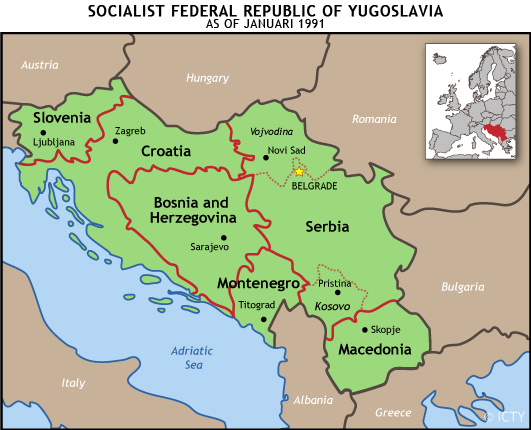
What is the former Yugoslavia ? | International Criminal Tribunal for the  former Yugoslavia


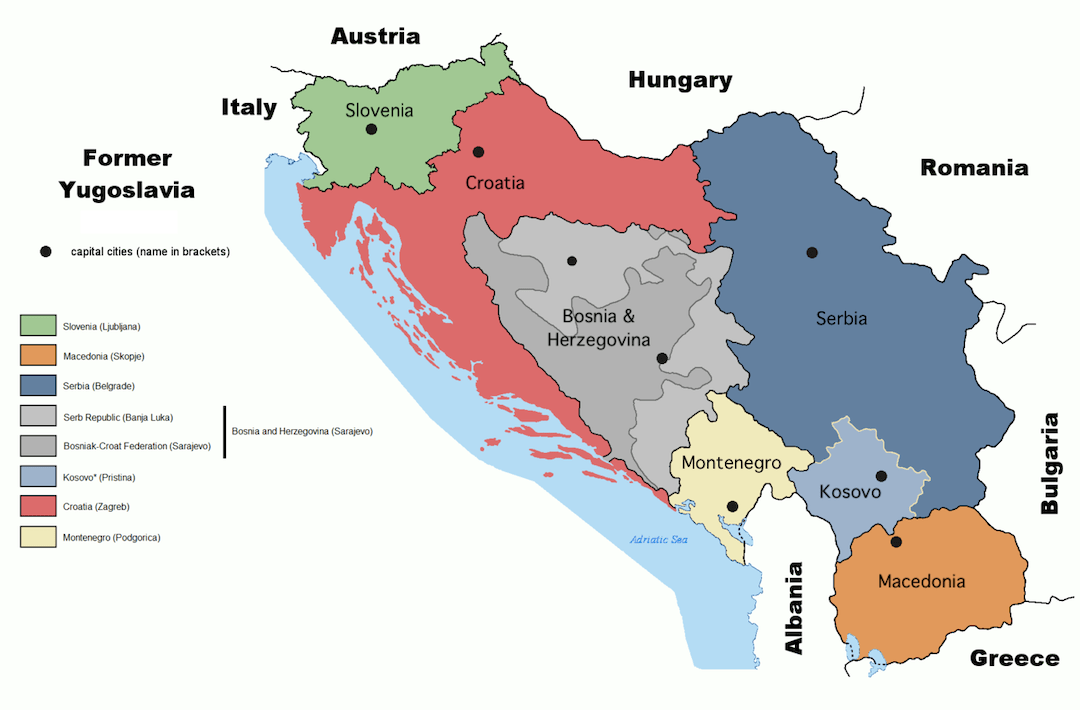
When Italy entered World War I, it was promised territorial gains that were never delivered. Losing over 600,000 troops Italy felt betrayed, fueling tensions with the newly formed Yugoslavia—a state comprising Bosnia Herzegovina, Croatia, Macedonia, Montenegro, Serbia, and Slovenia, led by Tito. After Tito’s death in 1980, Yugoslavia’s member states sought independence, resulting in civil war from 1991 to 2001 marked by ethnic cleansing and conflict among Serbs, Croats, Muslims, Orthodox Christians, and Catholics.


By all practical purposes, Italy was the loser in the Yugoslavia-Italy dispute.  Although winning the port city of Trieste, it lost the entire Istria peninsula and the cities of Fiume and Gorizia.  A loss that to this day stings the Italian soul.  To add insult to injury, Italians in these areas were forced to give up their homes and property and become refugees.  A national wound that cannot heal.  Between 1943 and 1960 350,000 Italians, mainly from Istria-Dalmatia were forced to evacuate.  One of these refugees was the famous auto racing driver, Mario Andretti, who eventually settled in the United States.


Il Lungo Esodo,” by Raoul Pupo is a book, in Italian, describing the atrocities and the conflict.