Showing posts with label istria. Show all posts

Saturday, August 1, 2026

Triple Entente Allies Stab Italy in the Back After World War I

 Under the secret Treaty of London, signed on April 26, 1915, Britain, France, and Russia promised Italy substantial territorial gains, financial loans, and strategic colonial concessions. In return, Italy agreed to abandon its neutrality and declare war on the Central Powers within one month. The specific territories promised are as follows: 

  •    Trentino and South Tyrol
  •   Trieste and the Austrian Littoral which includes Gorizia and the entire Istrian peninsula
  •    Dalmatia and a substantial chunk of the Balkan coastline which includes the city of Zara, now called Zadar in what is now Croatia
  •   Sovereignty over Albania
  •    The Dodecanese Islands and full sovereignty over the Aegean islands and 
  • Expansion of Italian African colonies.

Italy ultimately received Trentino, South Tyrol, and Trieste (only after World War II) but much of what had been promised—including the Italian-speaking peninsula of Istria and the Dalmatian coast—was denied to Italy. After the Second World War, many of these territories came under Yugoslav control under the communist dictator, Josip Broz Tito. Yugoslav partisans, under Tito, committed numerous summary executions of thousands of Italians, including common burials in pits and sink holes, known as the Foibe Massacres.


At the 1919 Paris Peace Conference, U.S. President Woodrow Wilson refused to honor the Treaty of London in full and opposed Italy’s claims to the territories it had been promised. What was the cost to Italy in joining the allies in World War I:

  • 2.1 million military casualties, including
  • 600,000 killed in action
  • 947,000 wounded
  • 600,000 captured or missing

In 1915 the population of Italy was 36 million, the United States population the same year was 100 million.The United States World War I casualties were 320,500 total, with 116,700 killed in action. 


So, it all came down to one man, Woodrow Wilson, who overruled Britain, France and Russia and the treaty of London.   So next time you promise your neighbor to go to war with you, will you believe any promises made? Wilson was a well known racist and a Darwinian eugenicist.  Click here for a description of him.


For those who understand Italian, attached is a video I recorded in 1985 in Sicily of one of my uncles, Cavaliere Giuseppe Neglia reciting a poem he wrote about his experience as an 18 year-old Italian soldier during World War I.  When he recited this poem in public half of the audience was in tiers:  https://www.youtube.com/watch?v=UVzmYO0bND0


Saturday, May 2, 2026

Italy - Yugoslavia Conflict After WW II


The Devastation of World War I

War unleashes unimaginable destruction, turning landscapes into infernos of suffering. World War I exemplified this devastation, marking a turning point in the history of warfare. Over the course of four years, the conflict resulted in more deaths than any previous war, with an estimated 85 million people losing their lives. The introduction of poison gas added a new level of horror to the battlefield, causing massive casualties and creating killing fields that had never been seen before.

Italy: From Victory to Tragedy

As is often the case with war, there are both winners and losers. Although Italy was on the victorious side in World War I, the aftermath brought serious consequences that extended well into the mid-1950s. The rise of Benito Mussolini's tyrannical regime marked the beginning of a troubled era. Following World War II, Italy found itself in conflict with Yugoslavia over national territories. The damage inflicted by Mussolini's fascist rule from 1924 to 1943 fueled ongoing tensions between Italy and Yugoslavia, leading to warfare and ethnic cleansing in areas around Trieste, Fiume, and Istria.Communist forces led by Marshall Tito, a Yugoslavian dictator, carried out mass killings of civilians between 1943-1949 in these regions. Many victims were disposed of in large pits known as Foibe in Italian. Ultimately, Italy suffered further losses, as it lost the territories of Istria and the city of Fiume to the Yugoslavian communists.

Historical Background: Shifting Territories

After the collapse of the Austria-Hungary Empire following World War I, territories previously occupied by Austria in northern Italy—specifically the regions of Trentino-Alto Adige and part of Friuli-Venezia Giulia—were affected by the reshaping of borders and political power. 


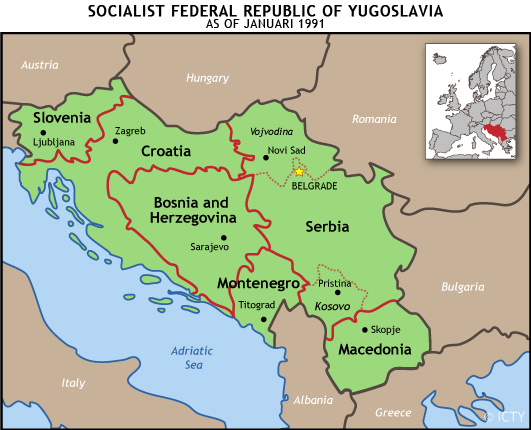
What is the former Yugoslavia ? | International Criminal Tribunal for the  former Yugoslavia


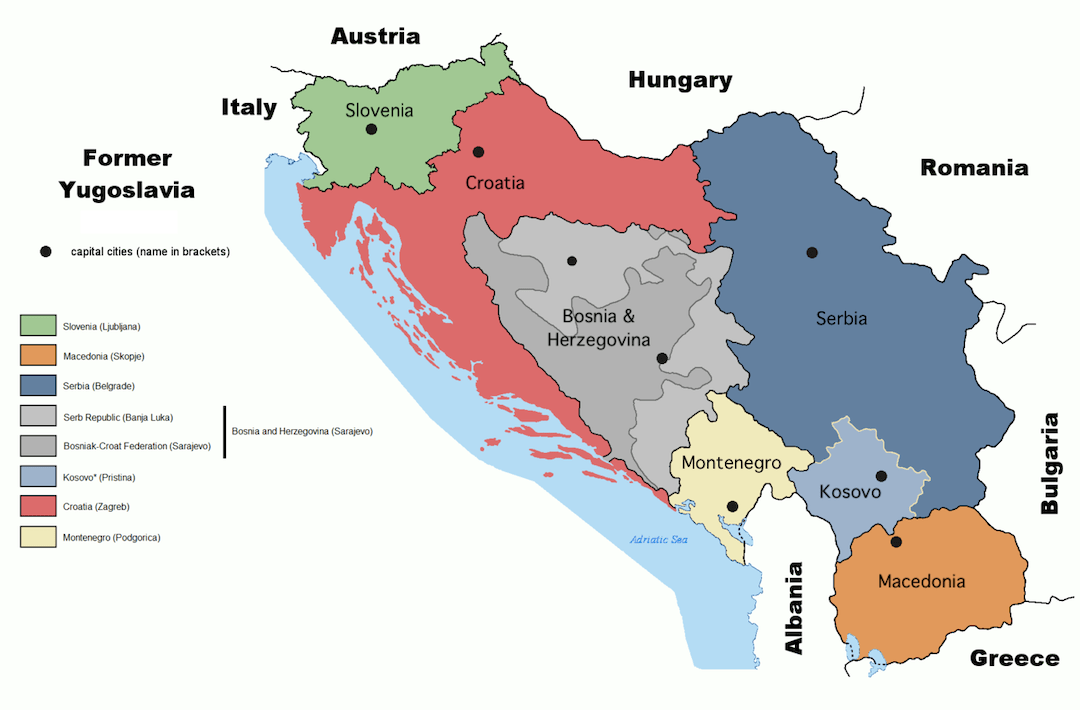
When Italy entered World War I, it was promised territorial gains that were never delivered. Losing over 600,000 troops Italy felt betrayed, fueling tensions with the newly formed Yugoslavia—a state comprising Bosnia Herzegovina, Croatia, Macedonia, Montenegro, Serbia, and Slovenia, led by Tito. After Tito’s death in 1980, Yugoslavia’s member states sought independence, resulting in civil war from 1991 to 2001 marked by ethnic cleansing and conflict among Serbs, Croats, Muslims, Orthodox Christians, and Catholics.


By all practical purposes, Italy was the loser in the Yugoslavia-Italy dispute.  Although winning the port city of Trieste, it lost the entire Istria peninsula and the cities of Fiume and Gorizia.  A loss that to this day stings the Italian soul.  To add insult to injury, Italians in these areas were forced to give up their homes and property and become refugees.  A national wound that cannot heal.  Between 1943 and 1960 350,000 Italians, mainly from Istria-Dalmatia were forced to evacuate.  One of these refugees was the famous auto racing driver, Mario Andretti, who eventually settled in the United States.


Il Lungo Esodo,” by Raoul Pupo is a book, in Italian, describing the atrocities and the conflict.